GA Freight Limited
Containers
Your Complete Guide to Shipping Containers
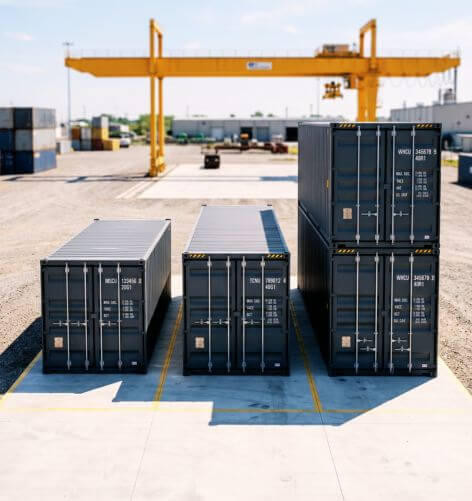
Did you know that 90% of the world’s cargo is transported by ship? This staggering volume of global trade relies on one essential innovation: the humble shipping container. To accommodate the incredible diversity of goods moving across oceans every day, a wide variety of container types have been developed—each engineered for a specific purpose, cargo type, and logistical challenge.
At GA Freight, with three generations of freight forwarding experience, we understand that selecting the right container is critical to protecting your cargo, optimising costs, and ensuring smooth transit. Here is your guide to the most common shipping container types and how to choose the right one for your shipment.
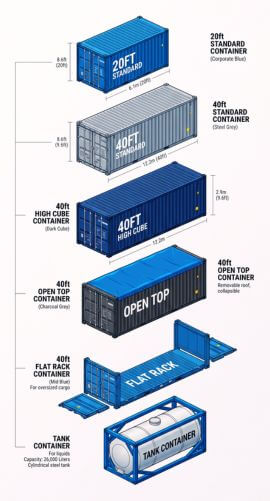
Container Dimensions
Common Shipping Container Types
Your Container Experts
GA Freight Limited
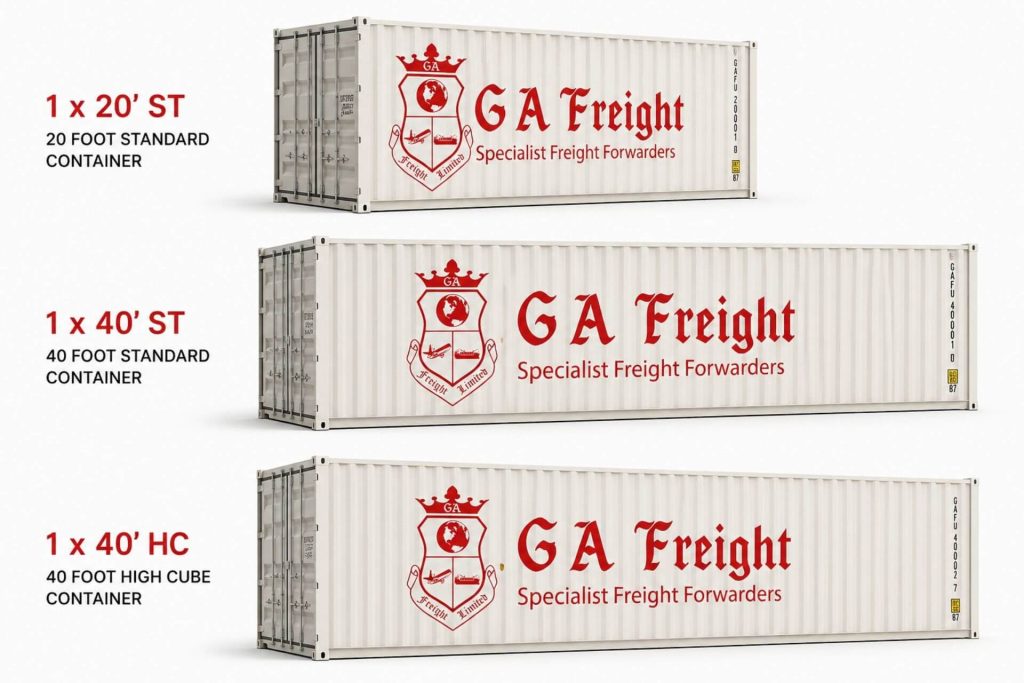
Standard
Standard Dry Containers (General Purpose)
The workhorse of global trade, standard dry containers are used for the vast majority of general cargo. They are fully enclosed and weatherproof, designed for goods that do not require temperature control.
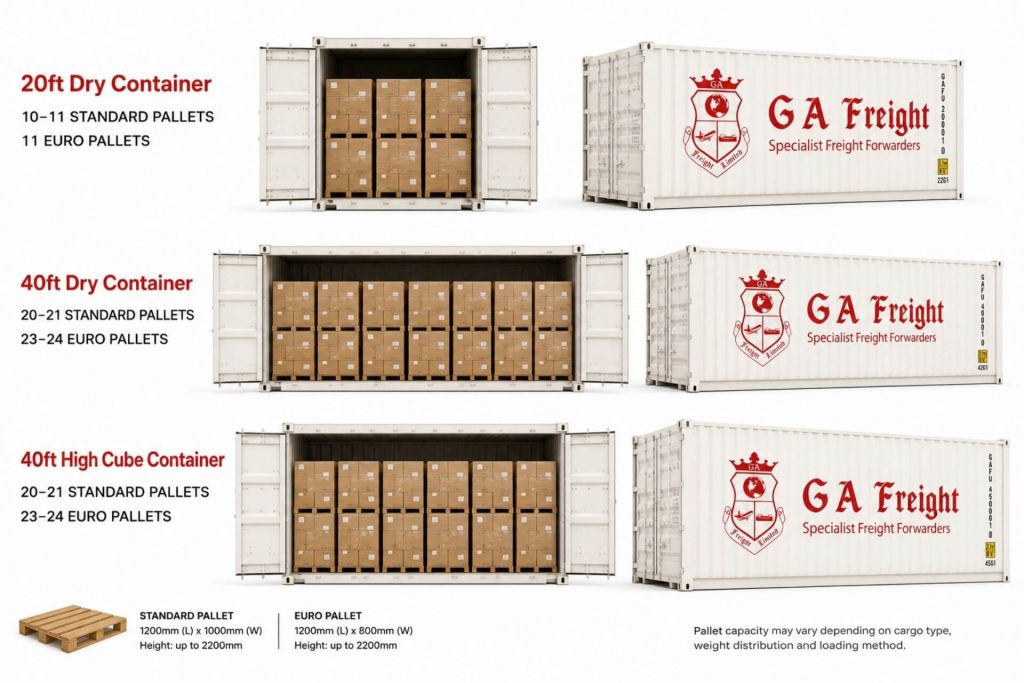
20ft Container: Ideal for heavier, denser cargo. Maximum payload typically ~28 tonnes.
40ft Container: Perfect for lighter, bulkier cargo. Maximum payload typically ~26 tonnes.
40ft High Cube (HC): Provides an extra foot of height (9’6″ vs 8’6″), ideal for voluminous but lightweight goods.
Best for: Boxed goods, palletised cargo, machinery parts, furniture, textiles, and general merchandise.
GA Freight Limited
High Cube
High Cube Containers
These are identical to standard containers but offer an additional 1 foot (30cm) in height. This extra space is invaluable for tall or awkwardly shaped items and can significantly improve loading efficiency for certain cargo types.
Best for: Voluminous cargo, tall machinery, lightweight manufactured goods.
GA Freight Limited
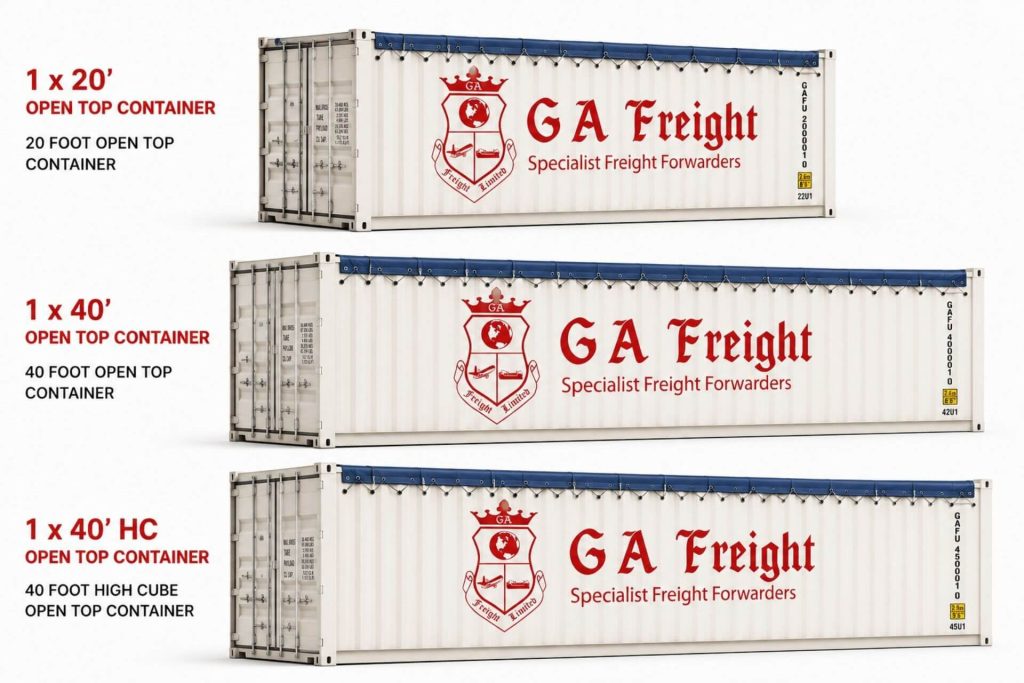
Open Top
Open Top Containers
When cargo is too tall or awkwardly shaped to fit through a standard container door, an open top is the solution. These containers have a removable tarpaulin roof, allowing loading from above via crane or forklift.
Best for: Heavy machinery, marble slabs, timber, scrap metal, tall equipment, and project cargo.
GA Freight Limited
Flat Rack
Flat Rack Containers
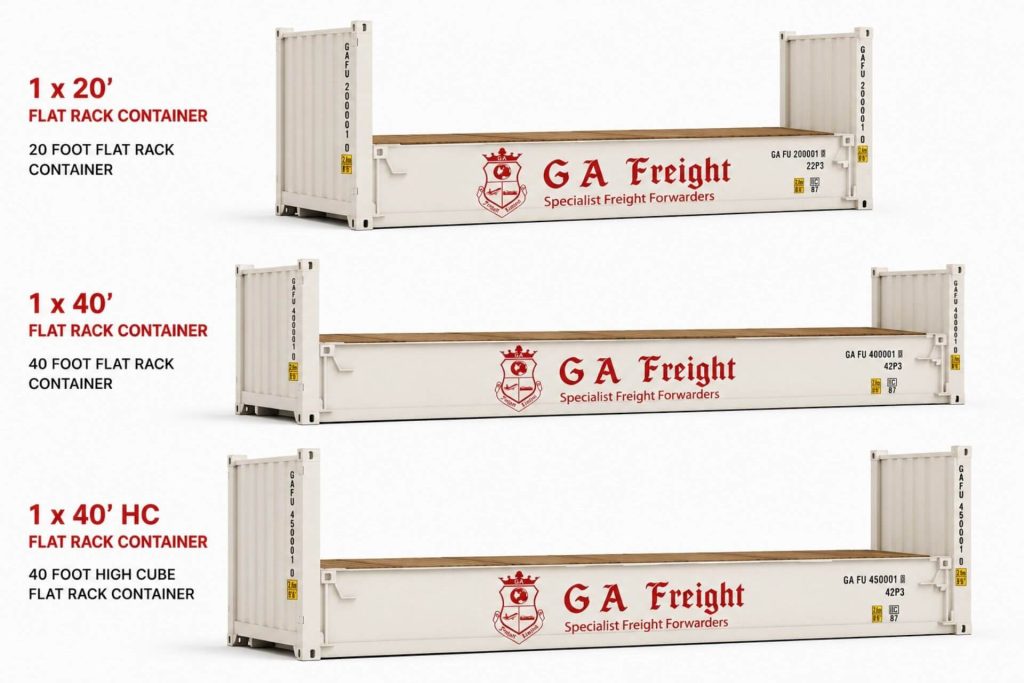
Flat racks consist of a strong floor base with collapsible end walls. They are designed for over-dimensional, heavy-lift, or awkwardly shaped cargo that cannot fit inside a standard enclosed container.
Fixed End Flat Rack: End walls remain upright for added security.
Collapsible Flat Rack: End walls fold down for storage when empty.
Best for: Construction equipment, vehicles, boats, pipes, industrial machinery, and large steel structures.
GA Freight Limited
Open Side
Open Side Containers
Also known as “full side access” containers, these feature double doors on the long side in addition to the standard end doors. This provides forklift access from the side, making loading and unloading wider items much easier.
Best for: Long pipes, timber, building materials, and cargo requiring side loading access.
GA Freight Limited
Reefer (Refrigerated)
Reefer Containers (Refrigerated)
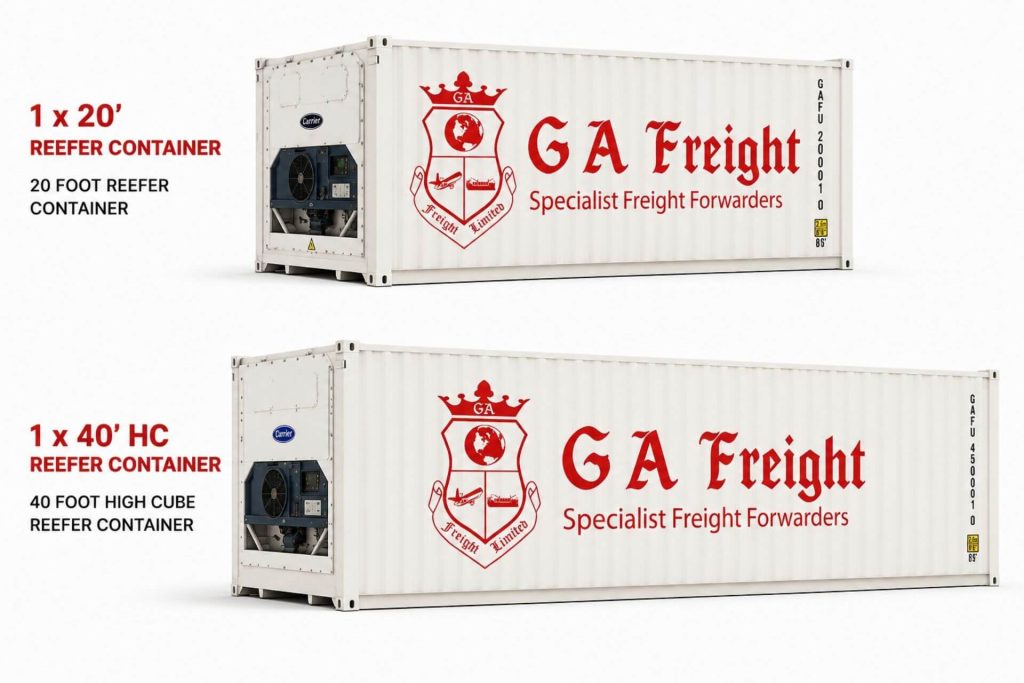
Reefer containers are temperature-controlled units that maintain a consistent internal climate, from frozen to chilled. They are equipped with integrated refrigeration units and require a power source onboard the vessel or at the terminal.
Best for: Perishable food (fruit, vegetables, meat, fish), pharmaceuticals, chemicals, and flowers.
GA Freight Limited
Tank
Tank Containers
Designed specifically for the safe transport of bulk liquids, tank containers consist of a cylindrical tank housed within a standard container frame.
Best for: Food-grade liquids (wine, oils, juices), chemicals, fuels, and hazardous liquids.
GA Freight Limited
Insulated
Insulated Containers
Similar to reefers but without active refrigeration, insulated containers maintain the temperature of pre-conditioned cargo. They are often used for goods that must remain within a specific temperature range but do not require continuous cooling.
Best for: Temperature-sensitive goods in moderate climates, chocolate, certain chemicals.
team
With a Professional Team
Alan Bishop
Alan Bishop